
We have talked a lot in the past about the various issues the trees on your property may face, such as diseases and insect issues, but there have only been a few times that we have discussed some of the more common trees found throughout Missouri and the areas Cartwright Tree Care services. It is definitely helpful to have some knowledge about the trees on your property, so we are going to begin featuring a new tree each month on our blog.
This month’s tree is the black cherry tree.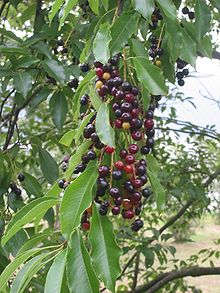
- The black cherry tree is also known as the wild cherry tree.
- Most black cherry trees are medium to large trees, typically growing up to 60 feet tall.
- This tree flowers between May and June, and bears fruit between August and September, producing edible cherries that are about ½ inch in diameter, dark purple or black in color, juicy, and bittersweet in taste.
- The wood of a black cherry is often used to make furniture, cabinets, veneer, panels, interior trims, and handles. In Missouri, it is second in demand to walnut for quality wood products.
Do you have any black cherry trees on your property?
And for the care and maintenance of all of the trees on your property, count on the experts at Cartwright Tree Care. Contact us at 816-965-6758 – now’s the time to begin planning for spring!

Photographer: Amerikaanse vogelkers. Image from Wikimedia Commons under the GNU Free Documentation License.