
The Truth About Emerald Ash Borer in Kansas City
There’s a lot of conversation around Emerald Ash Borer (EAB) in Kansas City—some accurate, some exaggerated, and some surprisingly outdated. What hasn’t changed is this: EAB is still one of the most destructive threats to urban trees our area has ever faced.
Emerald Ash Borer isn’t a pest you can ignore, and it isn’t something that “might eventually show up someday.” It’s been in the Kansas City metro for more than a decade and continues to spread through neighborhoods each year.
If you have an ash tree, understanding the truth about EAB can be the difference between saving it and losing it.
What Emerald Ash Borer Actually Is
Emerald Ash Borer is a small, metallic green beetle from Asia that attacks only ash trees. The adult beetles themselves don’t cause much harm—it’s their larvae that do the real damage.
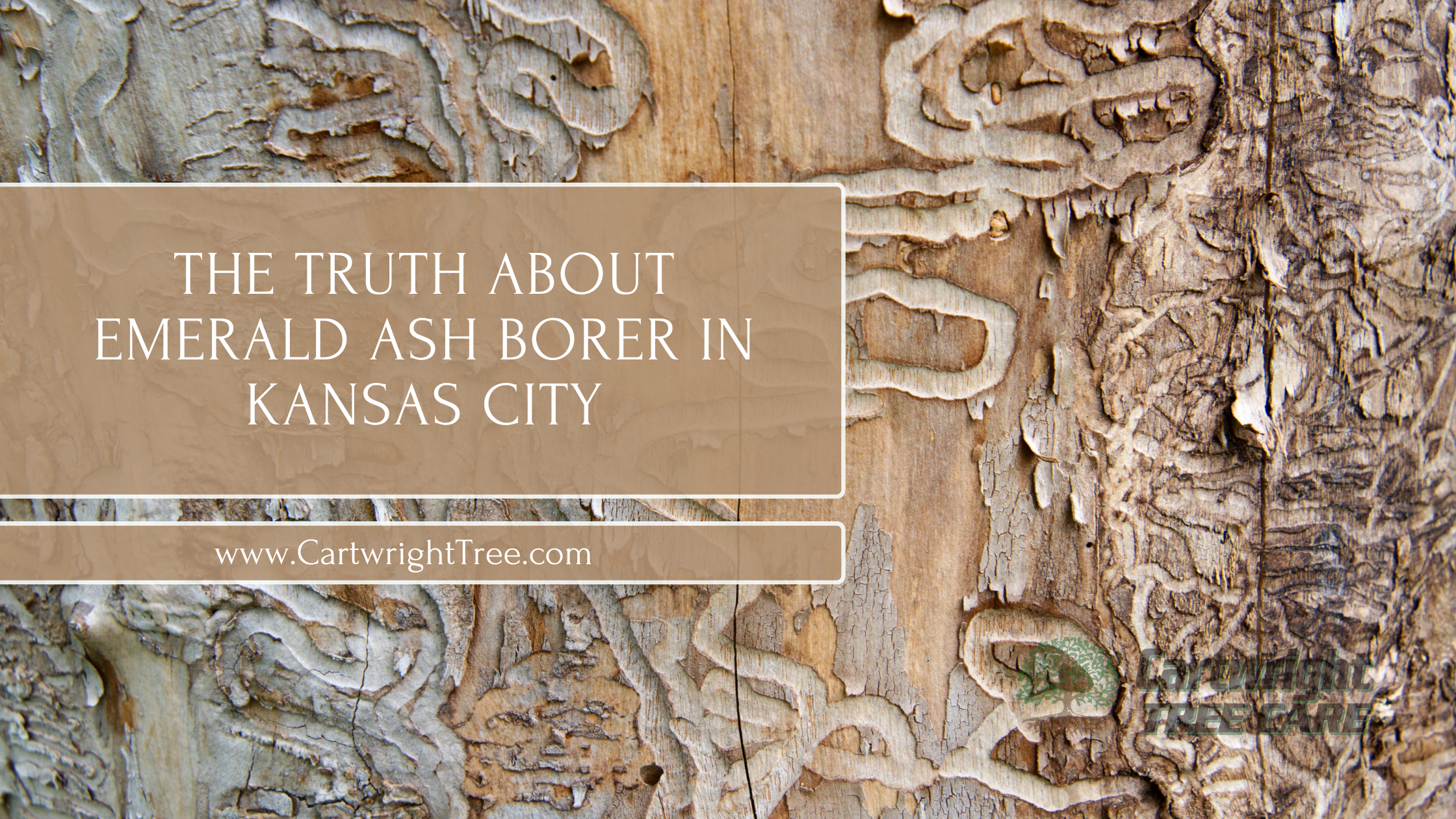
The larvae tunnel beneath the bark and destroy the tissues responsible for transporting water and nutrients. As these channels collapse, the tree essentially starves from the inside out.
This tunneling is what makes EAB so dangerous: early damage happens out of sight. By the time visible symptoms appear, significant internal decline has already occurred.
How Widespread EAB Is in Kansas City
EAB is established throughout the entire metro, including:
-
Kansas City, MO
-
Kansas City, KS
-
Overland Park
-
Olathe
-
Raymore
-
Lee’s Summit
-
Liberty
-
Independence
-
Parkville
-
North Kansas City
-
Belton
-
Blue Springs
There is no part of the KC area that has not been affected or will not be affected. If an ash tree is unprotected, it’s a matter of when, not if, it will be infested.
How to Recognize Early Signs of EAB
Because EAB damage starts internally, many homeowners miss the early warning signals. Here’s what you should be watching for:
Thinning canopy at the top of the tree
This is one of the earliest and most reliable visual signs.
Woodpecker activity
Woodpeckers feed on EAB larvae. Increased pecking is often the first signal something is wrong.
Sprouts or suckers growing low on the trunk
A distressed tree will try to produce new growth at the base when the top is dying.
Bark splitting or peeling
Tunneling under the bark causes cracks or vertical splits.
D-shaped exit holes
Tiny, distinct exit holes where adult beetles emerge from the tree.
Premature leaf drop
Ash trees typically hold leaves well into fall. Early leaf drop is a red flag.
If you notice even one of these signs, your ash tree needs immediate attention.
How Fast EAB Can Kill a Tree
Most untreated ash trees die within two to four years of infestation. Severely stressed trees decline even faster.
EAB moves quickly:
-
Year 1: Internal damage begins
-
Year 2: Canopy thinning is noticeable
-
Year 3: Major decline, significant dieback
-
Year 4: Tree becomes hazardous and often unsalvageable
Once a tree reaches heavy canopy loss (around 30–40%), treatment success drops dramatically.
Can an Ash Tree Be Saved?
Yes—but only if treated early.
The most effective protection is a professional trunk injection that delivers systemic insecticide directly into the vascular system of the tree. This method:
-
Stops active infestations
-
Prevents new larvae from developing
-
Provides multi-year protection
-
Strengthens recovery
-
Works significantly better than sprays
Trunk injections are the nationally recommended standard and are the only method proven to protect ash trees long-term.
Why Kansas City Ash Trees Are Especially Vulnerable
Kansas City conditions make ash decline happen faster:
-
High summer heat
-
Soil compaction from clay
-
Storm damage
-
Drought patterns
-
Dense urban environments
-
Pre-existing stress
A stressed tree is more likely to be targeted and less likely to survive.
Neighborhoods planted heavily with ash trees are experiencing rapid loss, leaving behind gaps in shade and property value.
Should You Remove or Treat?
If your ash tree still has most of its canopy and shows minimal decline, treatment is almost always the better—and far more affordable—option.
Consider removal when:
-
More than 40% of the canopy is gone
-
Large dead branches are present
-
The tree poses a safety hazard
-
The structural integrity is compromised
Professional evaluation is the safest way to make the call.
Final Thoughts
Emerald Ash Borer is here, it’s active, and it will continue to spread throughout Kansas City. The truth is simple: unprotected ash trees will not survive long-term.
But with early detection and proper treatment, many can be saved.
If you have an ash tree you want to preserve, now—not next year—is the time to take action.
