
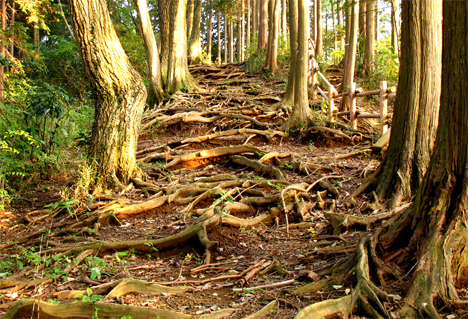
Did you know trees are pretty competitive? According to Princeton University Plant Ecologist Ray Dybzinski, trees typically have more roots than they actually need. The excess roots that trees create cause them to battle with other trees to grow taller in order to obtain maximum sunlight, Dybzinski told The New York Times.
Creating roots requires energy, and ideally, every tree should have just enough roots to get the proper amount of water and nutrients it needs. However, Dybzinski and his colleagues reported in The American Naturalist that trees create excess roots to cause neighboring trees to grow less successfully.
“They are fighting to stay in the light, and that is sort of not optimal,” Dybzinski said. “If they could somehow agree to cooperate and not compete, they could all stay closer to the ground and do something else with that energy, like create seeds.”
The team’s research was conducted in temperate climates, but they plan to study growth patterns of trees in the tropics and in grasslands to see if there are any similarities.
If you would like to read more about the competitive nature of trees, check out the article “Competitive Nature That Is Nurtured in Soil” at www.nytimes.com.
Photo credit: Joshua Rappeneker / Creative Commons via Treehugger.com.